
Win cycling bids with risk evidence for every street in the city.
When bids look alike, the sharper evidence base wins. Put predicted cycling risk for every street segment inside your plans and tenders, under your brand, at a fraction of the cost of a survey. Then run your proposals through our planning simulator and show evaluators what each one does to the whole network. The same model covers 300 European cities, so every recommendation comes with peer cities behind it.
Works with the World Bank on cycling intelligence for cities · Same model across 300 European cities
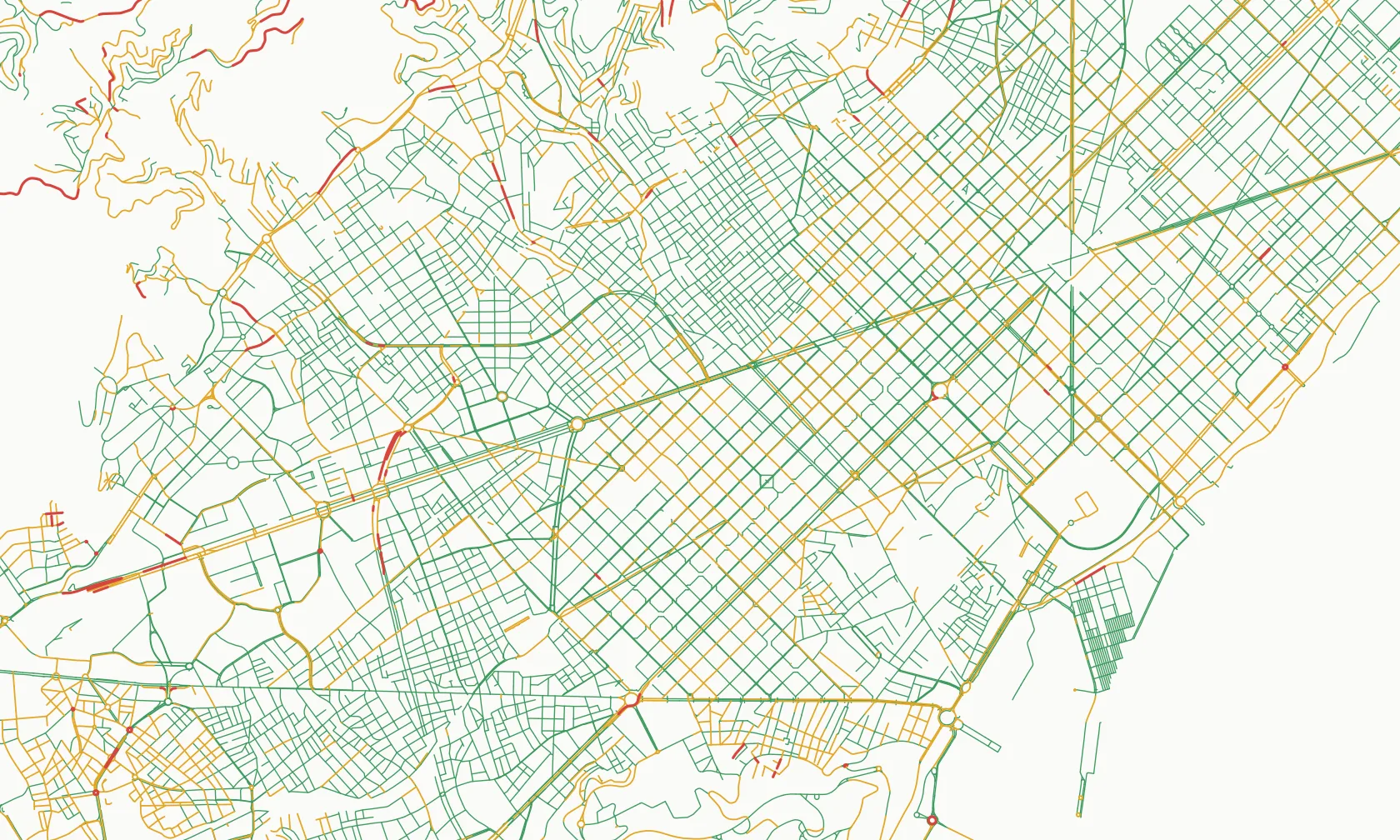
- Networkrisk on every street, by length
- Commute210 everyday trips
- Peerssame model, 300 cities
What you add to your bid
- Risk data and maps for your client’s city, in the format your report needs.
- Scenario results from the planning simulator: your proposed scheme run through the model, with its effect on the network, everyday trips and the city’s index scores.
- Peer-city comparison from the same model, so a recommendation stands on more than one city’s data.
- A white-label partner licence, so the analysis reads as part of your deliverable.
- A co-bidding partner for EU-funded calls such as EIT Urban Mobility, Horizon Europe and Interreg. Bring us in early and the risk analysis is ready before the call deadline.
Pricing is per project and on request.
Evidence that stands up to an evaluator
riders killed or seriously injured per bike trip, for every 10 index points, across 18 cities.
- Cities with safer streets see fewer serious cycling injuries. Across 18 European cities with bike counters, every 10 index points goes with about 22% fewer riders killed or seriously injured per bike trip.
- On the streets we rate High risk, serious injuries are more than twice as likely per passage as on the streets we rate Safer, across 2,034 counting sites in five countries.
- It works where crash data is missing, because it scores the roads themselves. We checked 45 cities against official bike-infrastructure figures: OpenStreetMap was typically close, and adding missing lanes moved no city out of its likely rank range. Small print: the city link is an association between countries, not proof of cause. The street model predicts injury severity, not crash frequency. City data CC BY 4.0; factors and their direction public. Method: preprint with DOI 10.5281/zenodo.23507613, not yet peer reviewed.
Free Demo and Audit
Tell us the city, the bid or plan, and the deadline. Victor Rotariu, the founder, replies himself, in English or Romanian. Send the short form and you can pick a time for a call straight away.
Prefer email? victor@defensivepedal.com
© 2026 Defensive Pedal SRL · Home · Cities · Pedalability Index: Cycling Risk · Methodology · Privacy · Terms